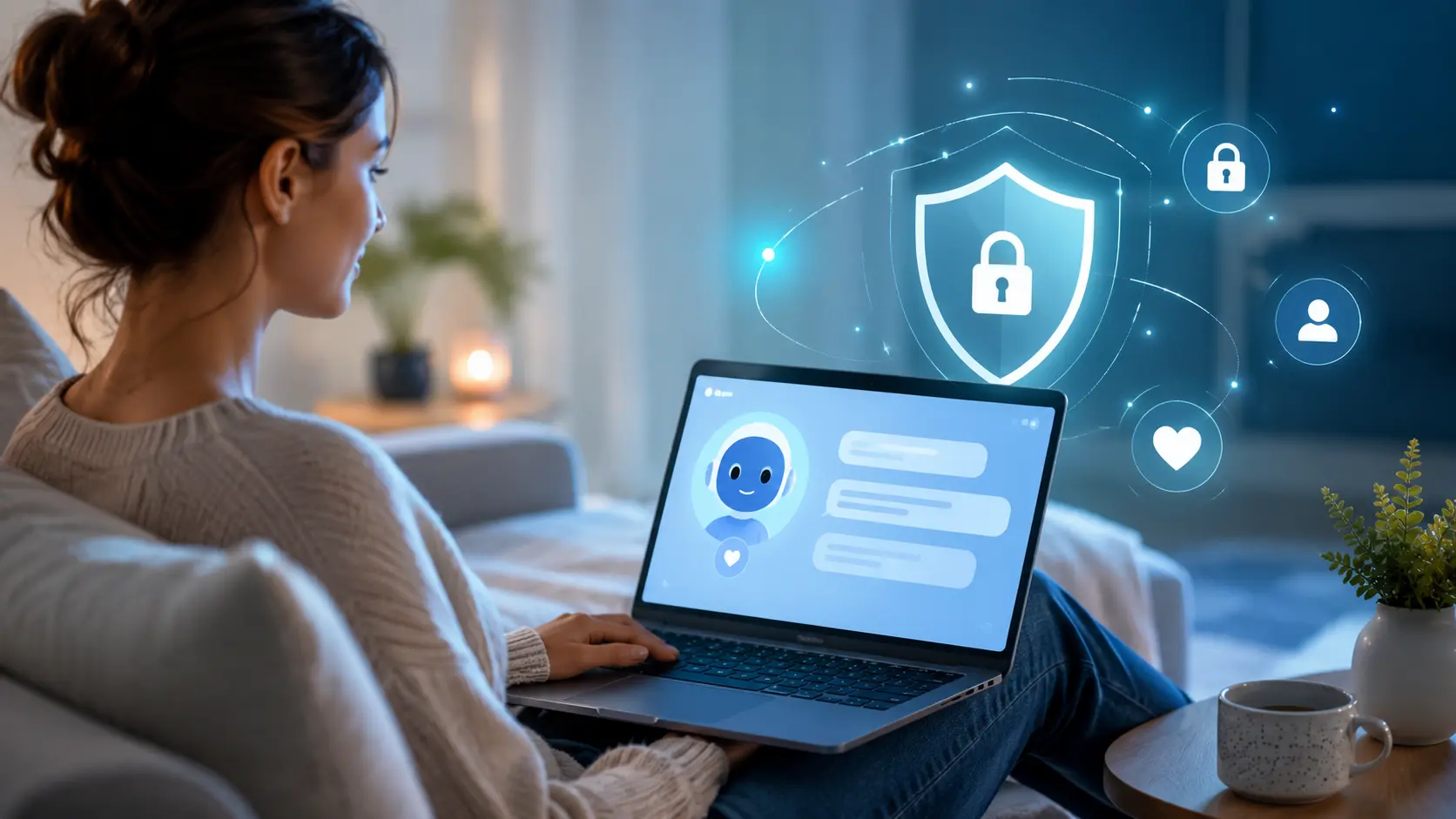
It's a fair question. And honestly, if you're asking it, it probably means you're actually thinking about trying AI therapy, which is a good thing.
So let me just tell you straight.
Yes, AI therapy is safe for most people in most situations. But there are specific situations where it isn't the right tool, and being honest about those matters more to me than just telling you what you want to hear.
Here's everything you need to know.
Will It Actually Make Things Worse?
This is usually what people are really asking. And for the vast majority of people, no, it won't.
Research actually suggests the opposite. A 2023 study found that people who used AI chatbots built on therapeutic frameworks showed measurable reductions in anxiety and depression after just two weeks. That's not a small thing. That's real.
Here's where I'll be straight with you though. AI therapy works best as a support tool, not a crisis tool. If you're going through a rough patch, struggling with anxious thoughts, or just need somewhere to process how you're feeling, it's genuinely helpful. It gives you a consistent, nonjudgmental space to talk things through.
Where it doesn't belong is in active crisis situations. If you're experiencing suicidal thoughts, severe depression that's affecting your ability to function, or a psychiatric emergency, please reach out to a licensed professional or a crisis helpline. AI therapy isn't built to handle acute clinical crises, and the honest ones will tell you that directly.
Is Your Data Actually Private?
This one matters a lot, especially for something as personal as mental health.
The honest answer is that it depends on which app you use, and you should check before you start.
For Soulful AI specifically, your conversations stay private. We don't sell your data to anyone. Not advertisers, not employers, not anyone. That's not a marketing line. That's just how it works.
For other apps, here are three things worth checking:
First, do they have a privacy policy written in plain English, not legal jargon? Second, do they share data with third parties? Some free apps make money through data, so it's worth reading the fine print. Third, where are your conversations stored, and for how long?
The fear that your employer or insurance company will find out you used a mental health app is understandable. But with reputable apps that take privacy seriously, that's not how it works. Your conversations don't go anywhere.
Can You Trust What It Tells You?
Mostly, yes, with one important caveat.
Good AI therapy apps are built on real, evidence-based approaches. CBT techniques for anxious thinking, mindfulness for stress, DBT strategies for emotional regulation. These aren't made up. They're the same frameworks that licensed therapists use, and they actually work.
The caveat is this: AI cannot diagnose you. It can help you recognize patterns in how you think and feel, but it doesn't have the clinical training or legal authority to say "you have generalized anxiety disorder" or "this sounds like PTSD." If you're looking for a diagnosis, you need a human professional for that.
That's not a flaw. That's just an honest description of what AI therapy is and isn't.
The Real Risks, Honestly
There are a few things worth knowing.
Over-reliance is one. Some people find it easier to talk to an AI precisely because it asks nothing of them in return. That's mostly a good thing, but if it becomes a way of avoiding real human connection entirely, that's worth noticing.
Not all apps are equal is another. The AI therapy space has grown fast and not everyone in it is careful. Some apps use basic chatbots with no real therapeutic framework behind them. Others are built thoughtfully, with evidence-based approaches and clear safety protocols. The difference matters a lot.
And crisis situations always need human support. If you're in crisis, please don't turn to an AI first. Call someone, text a helpline, reach out to anyone who can actually be there with you. The apps that take this seriously will tell you the same thing.
Who Should Use AI Therapy?
Here's a simple way to think about it.
It's a good fit if you're dealing with everyday stress, anxiety, low mood, or emotional overwhelm. If you want to work on specific patterns like negative thinking or overthinking. If you can't access a human therapist due to cost, waiting lists, or location. If you want support between sessions with a therapist you're already seeing. Or if you've never tried therapy before and want a lower-stakes starting point.
It's not the right tool if you're in active crisis. Or if you need a formal diagnosis, medication, or specialist clinical care for complex trauma.
That second list isn't a reason to avoid AI therapy. It's just a reason to know what it's for.
The Bigger Picture
I built Soulful AI. So I want to be honest with you in a way that I think most companies in this space aren't.
The mental health crisis is real. There aren't enough therapists. Costs are too high. Waiting lists are months long. Millions of people are dealing with anxiety, depression, and stress in silence because the traditional system is simply not accessible to them.
AI therapy doesn't fix all of that. But it does something real. It removes enough barriers that people who would have gotten nothing, get something. And something, including a space to process your thoughts, a tool to slow down anxious spiraling, a place to say something out loud, is genuinely better than nothing.
Is it perfect? No. Is it safe for most people most of the time? Yes. Is it better than suffering quietly while waiting six months for a therapy appointment? Almost certainly.
Try Soulful AI, Free and Private
If you've been thinking about trying it and this helped, Soulful AI is the most human version of AI therapy we could build. Face-to-face sessions, no waitlist, no judgment. And if you're in crisis, we'll tell you honestly and point you somewhere that can actually help.
If you are experiencing a mental health crisis or emergency, please contact emergency services or a crisis helpline in your country immediately. This article is for informational purposes only and does not constitute medical advice.