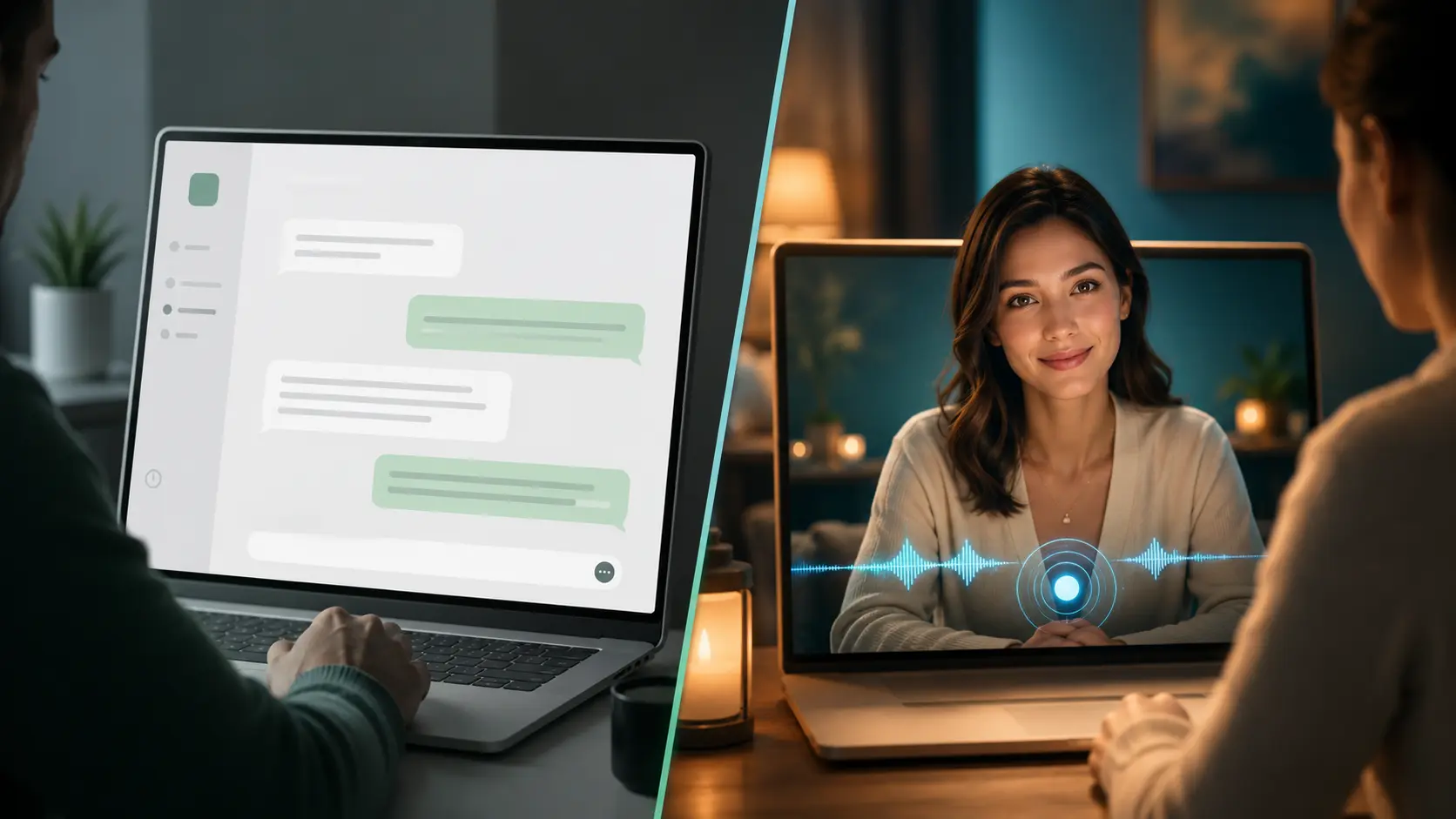
I want to start by saying something most people in my position wouldn't say.
ChatGPT is genuinely impressive. It's smart, it's empathetic, and a lot of people already use it to talk through hard things. I get it. When you're struggling at midnight and you don't know who to call, opening ChatGPT feels safe. It listens. It responds thoughtfully. And it doesn't judge you.
So why build something different?
Because there's a real gap between a general AI that can talk about mental health and an AI that was actually built for mental health. And I think that gap matters more than most people realize.
Here's the honest comparison.
What ChatGPT Is Good At
Let me be fair first, because I think being honest here actually builds more trust than just bashing a competitor.
ChatGPT is excellent at explaining things. If you want to understand what cognitive behavioral therapy is, how anxiety affects the nervous system, or what the difference between a panic attack and a heart attack feels like physically, ChatGPT will give you a really clear, well-written answer.
It's also good at listening in a general sense. If you type out what's been bothering you, it will reflect it back, ask some follow-up questions, and offer a thoughtful response. For a lot of people, that alone feels meaningful. Being heard matters, even if it's by a machine.
And it's available instantly. No setup, no account for basic use, no waiting.
Where ChatGPT Falls Short for Mental Health
Here's where I get honest about the actual gaps.
It's not built for therapy. ChatGPT is a general-purpose AI. It was designed to be helpful across every possible topic, from writing code to planning a vacation to explaining quantum physics. Mental health is one of hundreds of things it can discuss, but it's not what the system was built around. There's a meaningful difference between an AI that can talk about therapy and one that was designed to actually deliver it.
It doesn't have continuity. Start a new chat and ChatGPT has no idea who you are. It doesn't remember the anxiety pattern you talked about last week, the relationship issue you've been working through, or the fact that you've been really struggling lately. Every session starts from zero. Real therapeutic progress depends on continuity, and ChatGPT just doesn't have it.
It has no structure. A therapist doesn't just listen and respond. They guide you through a process. They use specific frameworks, CBT, DBT, mindfulness, trauma-informed approaches, because those frameworks are what produce results. ChatGPT can mention these things, but it doesn't apply them consistently the way a purpose-built therapy tool does.
It has no face. This sounds small but it isn't. One of the things research consistently shows about therapy is that the relational element, the feeling of being seen by someone, is one of the biggest predictors of whether it helps. Text on a screen is better than nothing. But it's still text on a screen.
It can go off the rails. ChatGPT will try to be helpful, and sometimes that means offering advice that sounds reasonable but isn't appropriate in a mental health context. It doesn't have the clinical guardrails that purpose-built mental health tools are designed around.
What Soulful AI Does Differently
I'm going to try to say this without making it sound like a sales pitch, because I genuinely think the differences matter beyond just "buy my thing."
It's face-to-face. This is the biggest one. When you open a Soulful AI session, you see a face. The AI sees you. It reads your expressions. It hears the tone in your voice. It responds to how you actually seem, not just the words you typed. No other AI therapy tool does this right now. And I built it this way because I genuinely believe presence matters in therapy, even when it's AI presence.
It's built around therapeutic frameworks. Not just able to mention CBT. Actually built to use it. The sessions follow therapeutic structures that are designed to help you process, reflect, and move forward, not just vent.
It knows what it is. Soulful AI doesn't pretend to be a licensed therapist. It's clear about what it can and can't do. If you're in crisis, it won't just keep chatting. It will tell you that you need more support than it can provide and point you somewhere that can help.
It's designed for the feeling, not just the information. ChatGPT is optimized to give you good information. Soulful AI is optimized to make you feel heard, supported, and a little lighter after the conversation. Those are genuinely different goals.
The Honest Comparison
| ChatGPT | Soulful AI | |
|---|---|---|
| Face-to-face sessions | No | Yes |
| Built for mental health | No, general purpose | Yes, purpose-built |
| Therapeutic frameworks | Mentions them | Applies them |
| Session continuity | No, resets each chat | Yes |
| Crisis protocols | Basic | Yes, clear guardrails |
| Voice and expression reading | No | Yes |
| Available free | Yes, basic | Yes, free to start |
| Designed to make you feel better | Tries | Built for it |
Who Should Use ChatGPT for Mental Health
I actually think there are cases where ChatGPT makes sense.
If you want to understand something, what a diagnosis means, how a medication works, what a therapy technique involves, ChatGPT is great for that. It's essentially a very smart encyclopedia.
If you just need to vent and you have no other outlet, it will listen. And sometimes that's enough.
If you're not sure whether what you're feeling counts as a real mental health issue or just a bad week, talking it through with ChatGPT can help you figure out if you need more support.
Who Should Use Soulful AI
If you want something that actually feels like a therapy session rather than a conversation with a very smart search engine, Soulful AI was built for that.
If you want consistency, structure, and something that applies real therapeutic approaches rather than just describing them, Soulful AI was built for that too.
And if you want to feel like someone is actually looking at you when you talk, not just processing your text, that's the whole reason I built the face-to-face element. Because I think that matters. A lot.
The Bottom Line
ChatGPT is impressive and it's not nothing. But using a general AI for therapy is a bit like using Google Maps for a hiking expedition. It'll give you some useful information, but it wasn't designed for that terrain.
Soulful AI isn't perfect either. It's newer. It doesn't have years of published clinical research behind it yet. But it was built with one specific goal, to make mental health support feel more human, more accessible, and more consistent for people who need it.
If you've been using ChatGPT for mental health support and it's been helping, I'm genuinely glad. Keep going. But if you've ever felt like something was missing, like the conversation was helpful but a little hollow, that's exactly the gap Soulful AI was built to fill.
Try Soulful AI Free, No Waitlist →
If you are experiencing a mental health crisis, please contact a licensed professional or crisis helpline in your country. This article reflects the personal opinion of the author and does not constitute clinical advice.